
Class 8 Science Chapter 13 Our Home : Earth, a Unique Life Sustaining Planet (New Course)

  • Home
  • Class 8 Science Chapter 13 Our Home : Earth, a Unique Life Sustaining Planet (New Course)
ptitle-particle2
ptitle-particle1

Report a question

You cannot submit an empty report. Please add some details.

Class 8 Science Chapter 13 Our Home : Earth, a Unique Life Sustaining Planet (New Course)

This quiz on Class 8 Science Chapter 13: Our Home – Earth, a Unique Life Sustaining Planet is designed to test students’ understanding of the special characteristics that make Earth the only known planet to support life. It covers topics such as the structure of Earth, the presence of air, water, and soil, the role of the atmosphere in protecting life, and the delicate balance of natural resources that sustain ecosystems. Through a variety of thought-provoking questions, students will explore how Earth’s unique conditions—like its suitable distance from the Sun, availability of oxygen, and the presence of the water cycle—create a perfect environment for life to thrive. This quiz encourages learners to appreciate the uniqueness of our planet and to recognize the importance of conserving its resources for future generations.

1 / 100

Topic/Sub Topic: Why Is Earth a Unique Planet?

1. How does the Earth’s magnetic field contribute to making it a habitable planet?

2 / 100

Topic/Sub Topic: Why Is Earth a Unique Planet?

2. Why is the Earth’s position in the solar system vital for supporting life?

3 / 100

Topic/Sub Topic: Earth’s Surface and Life

3. How does the Earth’s nearly circular orbit around the Sun contribute to its ability to sustain life?

4 / 100

Topic/Sub Topic: Earth’s Surface and Life

4. What role does the Earth’s atmosphere play in protecting life on the planet?

5 / 100

Topic/Sub Topic: Life on Earth exists on a thin layer of the crust.

5. Which of the following statements best explains why life is restricted to the Earth’s crust, despite significant geothermal activity and habitable conditions beneath?

6 / 100

Topic/Sub Topic: Life on Earth exists on a thin layer of the crust.

6. How do plants contribute to the sustainability of life through their interaction with the atmosphere?

7 / 100

Topic/Sub Topic: Comparison of Earth’s crust to an apple’s skin.

7. What makes Earth unique among planets in terms of supporting life?

8 / 100

Topic/Sub Topic: Comparison of Earth’s crust to an apple’s skin.

8. What does the analogy of Earth’s crust being like an apple’s skin suggest about its thickness relative to the rest of the Earth?

9 / 100

Topic/Sub Topic: What Do the Planets of Our Solar System Look Like?

9. Among the planets listed below, which one has a radius comparable to Earth’s?

10 / 100

Topic/Sub Topic: What Do the Planets of Our Solar System Look Like?

10. If Earth’s radius is taken as 1 unit, which of the following planets has a radius closest to Earth’s radius?

11 / 100

Topic/Sub Topic: Characteristics of Planets

11. Which of the following planets does not have an atmosphere?

12 / 100

Topic/Sub Topic: Characteristics of Planets

12. If the average surface temperature of Neptune is -200°C, which follows the pattern of decreasing temperatures with increasing distance from the Sun but not linearly due to atmospheric factors, what could be a reason for Venus deviating from this pattern by becoming the hottest planet?

13 / 100

Topic/Sub Topic: Overview of planets in the solar system (Mercury, Venus, Earth, Mars, Jupiter, Saturn, Uranus, and Neptune).

13. What makes Venus the hottest planet in our solar system despite not being the closest to the Sun?

14 / 100

Topic/Sub Topic: Overview of planets in the solar system (Mercury, Venus, Earth, Mars, Jupiter, Saturn, Uranus, and Neptune).

14. (A) Venus is the hottest planet in our solar system.
(R) Venus has a thick atmosphere rich in carbon dioxide which traps heat effectively.

15 / 100

Topic/Sub Topic: Gas giants: Jupiter, Saturn, Uranus, Neptune.

15. Considering the rotational dynamics and atmospheric phenomena of the gas giants, what can be inferred about the relationship between the speed of rotation and the nature of storms on these planets?

16 / 100

Topic/Sub Topic: Gas giants: Jupiter, Saturn, Uranus, Neptune.

16. Which gas giant is known for its prominent ring system?

17 / 100

Topic/Sub Topic: Rocky planets: Mercury, Venus, Earth, Mars.

17. What primarily composes the thick atmosphere of Venus, contributing to its high surface temperature?

18 / 100

Topic/Sub Topic: Rocky planets: Mercury, Venus, Earth, Mars.

18. Given that Mars has a much thinner atmosphere compared to Earth, how does this affect the temperatures experienced on Mars during day and night?

19 / 100

Topic/Sub Topic: Differences in temperature and atmospheric conditions across planets.

19. (A) Venus is the hottest planet in the solar system.
(R) Venus has a thick atmosphere rich in carbon dioxide, which traps heat.

20 / 100

Topic/Sub Topic: Differences in temperature and atmospheric conditions across planets.

20. (A) Venus is the hottest planet in our solar system despite being the second from the Sun.
(R) Venus has a thick atmosphere rich in carbon dioxide which causes an intense greenhouse effect.

21 / 100

Topic/Sub Topic: What Makes the Earth Suitable for Life to Exist?

21. (A) The Earth’s distance from the Sun allows water to remain mostly in liquid form, which is essential for sustaining life.
(R) If the Earth were much smaller, it would not have a strong enough gravity to hold onto its atmosphere.

22 / 100

Topic/Sub Topic: What Makes the Earth Suitable for Life to Exist?

22. What role does Earth’s magnetic field play in making it suitable for life?

23 / 100

Topic/Sub Topic: Position of the Earth

23. What would happen to Earth’s water if it were significantly closer to the Sun?

24 / 100

Topic/Sub Topic: Position of the Earth

24. What is the primary reason that Earth’s position makes it suitable for life?

25 / 100

Topic/Sub Topic: Earth’s distance from the Sun allows water to exist in liquid form.

25. Why is the presence of liquid water crucial for the evolution and sustenance of life on Earth compared to planets farther from the Sun where water is mainly solid?

26 / 100

Topic/Sub Topic: Earth’s distance from the Sun allows water to exist in liquid form.

26. (A) Earth’s distance from the Sun allows it to sustain liquid water on its surface.
(R) The habitable zone, or Goldilocks zone, is the range of distances from a star where conditions might be right for life.

27 / 100

Topic/Sub Topic: The concept of the habitable zone (Goldilocks zone).

27. What would likely happen to Earth’s climate if it were significantly farther from the Sun than its current position?

28 / 100

Topic/Sub Topic: The concept of the habitable zone (Goldilocks zone).

28. What is meant by the term “Goldilocks zone” when referring to a planet’s habitability?

29 / 100

Topic/Sub Topic: Size of the Earth

29. How does the size of the Earth contribute to its ability to sustain an atmosphere?

30 / 100

Topic/Sub Topic: Size of the Earth

30. (A) The Earth’s size helps maintain its atmosphere, which is necessary for sustaining life.
(R) If the Earth were much larger, its gravity might be too weak to retain atmospheric gases.

31 / 100

Topic/Sub Topic: Earth’s size allows it to support a stable atmosphere.

31. Which part of Earth’s atmosphere helps in blocking harmful ultraviolet (UV) rays from the Sun?

32 / 100

Topic/Sub Topic: Earth’s size allows it to support a stable atmosphere.

32. Why is oxygen considered a vital component of Earth’s atmosphere?

33 / 100

Topic/Sub Topic: The role of gravity in holding the atmosphere.

33. Why is the presence of oxygen in Earth’s atmosphere beneficial beyond providing breathable air?

34 / 100

Topic/Sub Topic: The role of gravity in holding the atmosphere.

34. How does Earth’s atmosphere compare to that of Mars and Mercury regarding gravity’s influence?

35 / 100

Topic/Sub Topic: Importance of the ozone layer in blocking harmful UV rays.

35. (A) The ozone layer is crucial for supporting life on Earth as it blocks all ultraviolet (UV) rays from reaching the Earth’s surface.

(R) UV rays are harmful to living cells and can lead to skin cancer and other health issues.

36 / 100

Topic/Sub Topic: Importance of the ozone layer in blocking harmful UV rays.

36. Why is the presence of the ozone layer crucial for protecting biological systems on Earth?

37 / 100

Topic/Sub Topic: Magnetic Field of the Earth

37. How does the Earth’s magnetic field help protect life on Earth from cosmic rays?

38 / 100

Topic/Sub Topic: Magnetic Field of the Earth

38. (A) The magnetic field of the Earth protects life by deflecting harmful cosmic rays and solar wind.

(R) Molten iron in Earth’s core generates a magnetic field which acts as a shield against particles from space.

39 / 100

Topic/Sub Topic: Earth behaves like a giant magnet.

39. Why does a freely suspended magnet point in a fixed direction?

40 / 100

Topic/Sub Topic: Earth behaves like a giant magnet.

40. Which statement best describes how the solar wind could impact Earth if not for the magnetic field?

41 / 100

Topic/Sub Topic: Protection from harmful cosmic rays and solar wind.

41. (A) The Earth’s magnetic field prevents all cosmic rays from reaching the Earth’s surface.
(R) The movement of molten iron in the Earth’s core generates a magnetic field which acts like a shield against high-energy particles.

42 / 100

Topic/Sub Topic: Protection from harmful cosmic rays and solar wind.

42. What is believed to be the primary source of Earth’s magnetic field?

43 / 100

Topic/Sub Topic: What Allows Life to Be Sustained on Earth?

43. (A) Earth’s biosphere remains habitable because it maintains a delicate balance between living and non-living components.
(R) Decomposers play a crucial role in breaking down dead matter, returning essential nutrients to the soil, thereby supporting continuous plant growth.

44 / 100

Topic/Sub Topic: What Allows Life to Be Sustained on Earth?

44. (A) Plants produce oxygen through photosynthesis, which is essential for the survival of most living organisms.

(R) Photosynthesis involves plants taking carbon dioxide from the air and water from the soil to produce glucose and oxygen in the presence of sunlight.

45 / 100

Topic/Sub Topic: Air, Water, and Sunlight

45. Consider the interconnected roles of air and sunlight in enabling life on Earth. Which process exemplifies how these elements work together to maintain a balance crucial for life?

46 / 100

Topic/Sub Topic: Air, Water, and Sunlight

46. In what way does the interaction between sunlight and the hydrosphere facilitate nutrient transport in terrestrial plants?

47 / 100

Topic/Sub Topic: Soil, Rocks, and Minerals

47. Which of the following best explains how geodiversity contributes to sustaining life on Earth?

48 / 100

Topic/Sub Topic: Soil, Rocks, and Minerals

48. (A) Soil is essential for plant growth because it is rich in nitrogen and potassium.
(R) Soil nutrients like nitrogen and potassium come from the breakdown of rocks and organic matter.

49 / 100

Topic/Sub Topic: Plants, Animals, and Microorganisms

49. (A) Earth’s ability to sustain a diverse range of life is primarily due to the continuous reproduction and evolution of plants, animals, and microorganisms.

(R) Reproduction in living beings often results in identical offspring, maintaining genetic uniformity across generations.

50 / 100

Topic/Sub Topic: Plants, Animals, and Microorganisms

50. Consider a scenario where deforestation results in reduced rainfall in a region. Which component interactions best explain how this impacts life sustainability on Earth?

51 / 100

Topic/Sub Topic: The Importance of Balance

51. (A) The balance between various natural elements is crucial for sustaining life on Earth.
(R) The destruction of forests does not affect the air quality and biodiversity of a region.

52 / 100

Topic/Sub Topic: The Importance of Balance

52. Considering the Earth’s magnetic field’s protective role, what would be the immediate consequence on life if this field were significantly weakened?

53 / 100

Topic/Sub Topic: What Keeps Life from Disappearing?

53. (A) Geodiversity provides varied environmental conditions that support diverse forms of life on Earth.

(R) The Earth’s magnetic field creates a variety of landforms and climatic zones.

54 / 100

Topic/Sub Topic: What Keeps Life from Disappearing?

54. In a particular species of animal, the ability to survive in diverse environments is linked to genetic variation. How does sexual reproduction contribute to this genetic variation?

55 / 100

Topic/Sub Topic: What Keeps Life from Disappearing?

55. Consider two organisms: Organism A reproduces asexually, while Organism B reproduces sexually. Which statement best describes how these modes of reproduction affect the continuity of life on Earth?

56 / 100

Topic/Sub Topic: Asexual Reproduction

56. How do the genetic instructions within a Planaria allow it to regrow from a small body part, and what does this suggest about its cellular structure?

57 / 100

Topic/Sub Topic: Asexual Reproduction

57. How do hydra reproduce asexually?

58 / 100

Topic/Sub Topic: Asexual Reproduction

58. (A) In asexual reproduction, offspring are genetically identical to the parent.
(R) Asexual reproduction involves two parents contributing genetic material.

59 / 100

Topic/Sub Topic: Vegetative propagation in plants.

59. Which part of the potato plant is primarily used for vegetative propagation?

60 / 100

Topic/Sub Topic: Vegetative propagation in plants.

60. Which of the following plant parts is most commonly used for vegetative propagation in a money plant?

61 / 100

Topic/Sub Topic: Vegetative propagation in plants.

61. Considering both sexual and asexual reproductive processes, how do they collectively contribute to the adaptability and survival of plant species in varying environments over time?

62 / 100

Topic/Sub Topic: Asexual reproduction in microbes and simple animals.

62. Fragmentation is a form of asexual reproduction seen in some multicellular organisms. What role does fragmentation play in balancing ecosystems, particularly in aquatic environments?

63 / 100

Topic/Sub Topic: Asexual reproduction in microbes and simple animals.

63. Which of the following is a common method of asexual reproduction in single-celled organisms like bacteria?

64 / 100

Topic/Sub Topic: Asexual reproduction in microbes and simple animals.

64. Which statement best explains why offspring resulting from asexual reproduction are genetically identical to their parent?

65 / 100

Topic/Sub Topic: Sexual Reproduction

65. How are pollen grains transferred from one flower to another in the process of pollination?

66 / 100

Topic/Sub Topic: Sexual Reproduction

66. Which part of a flowering plant is responsible for producing the male gametes?

67 / 100

Topic/Sub Topic: Sexual Reproduction

67. In an aquatic environment where external fertilisation occurs, what measures ensure the successful meeting of gametes despite water currents?

68 / 100

Topic/Sub Topic: Role of gametes (sperm and egg) in sexual reproduction.

68. In what way do sperm and egg cells exhibit specialization to perform their roles in the process of sexual reproduction in mammals?

69 / 100

Topic/Sub Topic: Role of gametes (sperm and egg) in sexual reproduction.

69. What is the main function of gametes in sexual reproduction?

70 / 100

Topic/Sub Topic: Role of gametes (sperm and egg) in sexual reproduction.

70. What is the primary role of gametes in sexual reproduction?

71 / 100

Topic/Sub Topic: Differences between asexual and sexual reproduction in plants and animals.

71. What role do gametes play in sexual reproduction in animals?

72 / 100

Topic/Sub Topic: Differences between asexual and sexual reproduction in plants and animals.

72. Which statement best describes the impact of asexual and sexual reproduction on genetic diversity?

73 / 100

Topic/Sub Topic: Differences between asexual and sexual reproduction in plants and animals.

73. (A) Sexual reproduction introduces genetic variation in the offspring.
(R) During sexual reproduction, offspring are exact copies of their parents.

74 / 100

Topic/Sub Topic: Special cells for reproduction

74. Why does the genetic material not double every generation in sexual reproduction?

75 / 100

Topic/Sub Topic: Special cells for reproduction

75. In flowering plants, sexual reproduction involves the formation of which special cells that carry only half of the parent’s genetic material?

76 / 100

Topic/Sub Topic: Special cells for reproduction

76. What is the primary role of gametes in sexual reproduction?

77 / 100

Topic/Sub Topic: Sexual Reproduction in Plants

77. What develops after fertilization occurs in a flower?

78 / 100

Topic/Sub Topic: Sexual Reproduction in Plants

78. How does seed dispersal by animals contribute to plant reproduction?

79 / 100

Topic/Sub Topic: Sexual Reproduction in Plants

79. During the development of fruits in flowering plants, the fleshy part surrounding the ovules forms as a result of pollination and subsequent fertilization. Which advantage does the formation of fleshy fruits provide in terms of evolutionary success and propagation of the species?

80 / 100

Topic/Sub Topic: Sexual reproduction in animals

80. (A) In sexual reproduction, the zygote is formed by the fusion of male and female gametes.
(R) The formation of a zygote ensures genetic diversity.

81 / 100

Topic/Sub Topic: Sexual reproduction in animals

81. In water-based fertilisers, such as those in fish, where does zygote development take place after fertilisation?

82 / 100

Topic/Sub Topic: Sexual reproduction in animals

82. How does the development of a zygote into an embryo take place in birds?

83 / 100

Topic/Sub Topic: What Are the Threats to Life on Earth?

83. Considering how the release of greenhouse gases affects global temperatures, which sequence of events best describes the consequences on biodiversity and human settlements?

84 / 100

Topic/Sub Topic: What Are the Threats to Life on Earth?

84. How do international agreements like the Montreal Protocol contribute to addressing threats to life on Earth particularly concerning atmospheric health?

85 / 100

Topic/Sub Topic: What Are the Threats to Life on Earth?

85. Which of the following options best illustrates the chain reaction that occurs when pollution disrupts natural ecosystems, affecting both flora and fauna?

86 / 100

Topic/Sub Topic: Environmental Challenges

86. Which of the following is a consequence of rising global temperatures due to climate change?

87 / 100

Topic/Sub Topic: Environmental Challenges

87. Which of the following practices would most effectively reduce the emission of greenhouse gases?

88 / 100

Topic/Sub Topic: Environmental Challenges

88. What is a direct consequence of losing plant species due to habitat destruction?

89 / 100

Topic/Sub Topic: Climate change, biodiversity loss, and pollution (the triple planetary crisis).

89. (A) Global warming is primarily caused by the excessive release of greenhouse gases from human activities.
(R) The Montreal Protocol was established to address issues related to global warming by reducing carbon dioxide emissions.

90 / 100

Topic/Sub Topic: Climate change, biodiversity loss, and pollution (the triple planetary crisis).

90. What is one major consequence of burning fossil fuels?

91 / 100

Topic/Sub Topic: Climate change, biodiversity loss, and pollution (the triple planetary crisis).

91. Consider an ecosystem where grass serves as the primary producer. Due to deforestation, grasslands reduce by 40\%, directly affecting herbivore populations like deer which rely on grass for sustenance. Assuming the initial population of the deer is 10,000, what would be their population if it reduces proportionally with the grassland reduction?

92 / 100

Topic/Sub Topic: Effects of burning fossil fuels and global warming.

92. How does the increase in carbon dioxide due to burning fossil fuels impact the Earth’s climate?

93 / 100

Topic/Sub Topic: Effects of burning fossil fuels and global warming.

93. Explain how human activities have disrupted the natural carbon cycle, contributing to climate change.

94 / 100

Topic/Sub Topic: Effects of burning fossil fuels and global warming.

94. (A) Global warming can lead to the melting of ice caps and rising sea levels.
(R) Burning fossil fuels releases greenhouse gases, which trap heat in the Earth’s atmosphere.

95 / 100

Topic/Sub Topic: The role of deforestation and habitat destruction in disturbing ecosystems.

95. In what way do climate change and air pollution jointly exacerbate habitat destruction and threaten ecosystems?

96 / 100

Topic/Sub Topic: The role of deforestation and habitat destruction in disturbing ecosystems.

96. (A) Deforestation can lead to changes in rainfall patterns.
(R) Trees play a crucial role in the water cycle by returning water vapor to the atmosphere through transpiration.

97 / 100

Topic/Sub Topic: The role of deforestation and habitat destruction in disturbing ecosystems.

97. How does air pollution primarily affect human health?

98 / 100

Topic/Sub Topic: Pollution of air, water, and soil and its impact on life.

98. What gas is primarily released when burning fossil fuels, contributing to global warming?

99 / 100

Topic/Sub Topic: Pollution of air, water, and soil and its impact on life.

99. Which of the following is a primary source of water pollution affecting aquatic life?

100 / 100

Topic/Sub Topic: Pollution of air, water, and soil and its impact on life.

100. A city experiences a significant increase in vehicle emissions due to an exponential rise in traffic. This has resulted in severe air pollution problems. How might this situation impact the local environment and public health over time?

Your score is

The average score is 0%

Class 8 → Science → Chapter: Our Home: Earth, a Unique Life Sustaining Planet (New Course)


I. Chapter Summary

This chapter explains why Earth is the only known planet that supports life. It highlights essential conditions like suitable temperature, presence of water, atmosphere, and sunlight. It also explains Earth’s structure, movements (rotation and revolution), and how these factors create day-night cycles, seasons, and a balanced environment that sustains life.


II. Key Concepts Covered

1. Unique Features of Earth

  • Only planet known to support life
  • Presence of air, water, land, and suitable temperature

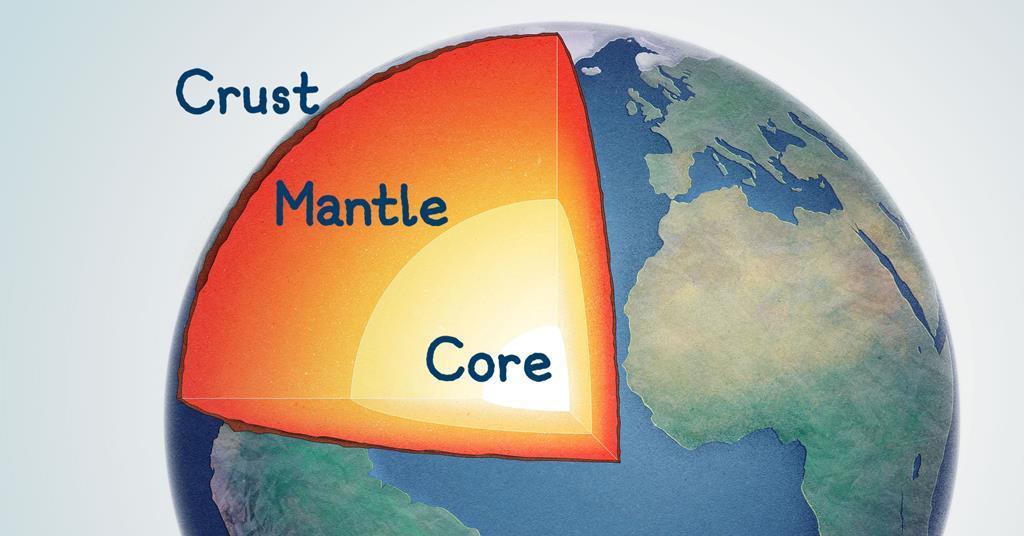
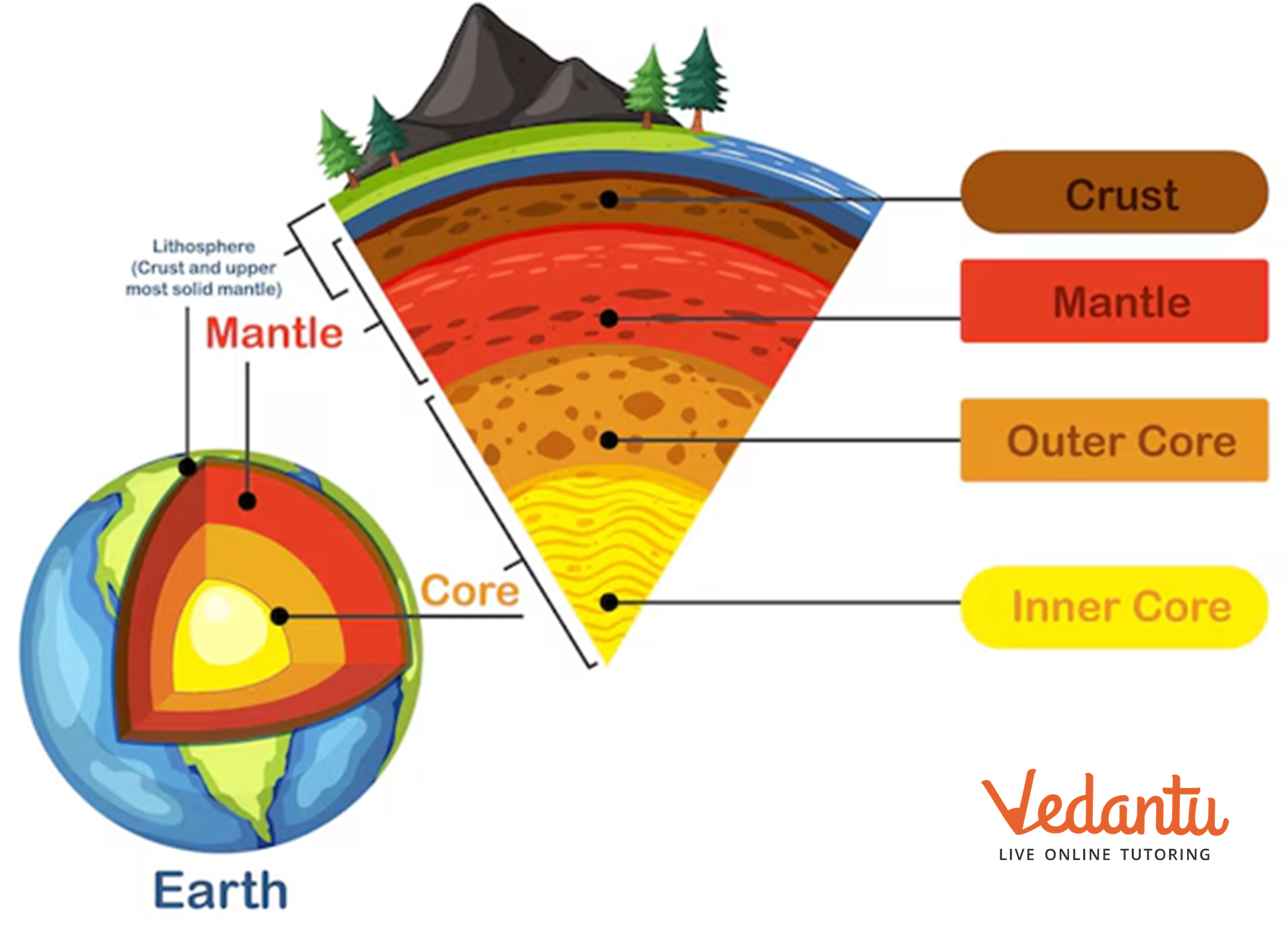
2. Layers of the Earth

  • Crust: Outer solid layer where we live
  • Mantle: Middle layer with hot molten rocks
  • Core: Innermost layer with very high temperature

Earth’s Internal Structure
https://www.vedantu.com/seo/content-images/43bfe459-a845-4adc-8f82-a22a15388773_Layers_of_the_Earth.png
https://d9-wret.s3.us-west-2.amazonaws.com/assets/palladium/production/s3fs-public/styles/full_width/public/thumbnails/image/eq-ed-earthwedge.gif?itok=dG_R0mzZ
https://d1ymz67w5raq8g.cloudfront.net/Pictures/1024x536/8/4/8/529848_earth0picturelayout_510767.jpg
4

3. Atmosphere

  • Layer of gases surrounding Earth
  • Contains oxygen for breathing and protects from harmful radiation

Atmosphere Layers

https://i.pinimg.com/736x/7c/5d/12/7c5d1236102dd470d97324f72c058a28.jpg
https://niwa.co.nz/sites/default/files/styles/gallery_wide/public/512px-Atmospheric_Layers.svg_.png?itok=rkVP_YWC
https://i.pinimg.com/474x/f0/e9/5f/f0e95fe495668c01fec9312e14244bd6.jpg
4

4. Hydrosphere

  • All water bodies on Earth (oceans, rivers, lakes)
  • Essential for life

5. Lithosphere

  • Solid landmass of Earth
  • Supports human activities

6. Rotation of Earth

  • Earth spins on its axis
  • Causes day and night

7. Revolution of Earth

  • Earth moves around the Sun
  • Causes seasons

8. Conditions Necessary for Life

  • Air (oxygen)
  • Water
  • Suitable temperature
  • Sunlight

III. Important Questions

(A) MCQs (1 Mark)

  1. Earth supports life because of:
    • (a) Presence of water and air ✅
    • (b) High temperature
    • (c) No atmosphere
    • (d) No sunlight
  2. The outermost layer of Earth is:
    • (a) Core
    • (b) Mantle
    • (c) Crust ✅
    • (d) Inner core
  3. Rotation of Earth causes:
    • (a) Seasons
    • (b) Day and night ✅
    • (c) Rainfall
    • (d) Wind
  4. Hydrosphere includes:
    • (a) Air
    • (b) Land
    • (c) Water bodies ✅
    • (d) Mountains

(B) Short Answer Questions (2/3 Marks)

  1. Why is Earth called a life-supporting planet?
  2. Name the three layers of Earth.
  3. What is atmosphere? Why is it important?
  4. Differentiate between rotation and revolution.

(C) Long Answer Questions (5 Marks)

  1. Explain the structure of Earth with diagram.
  2. Describe the importance of atmosphere in sustaining life.
  3. Explain how rotation and revolution affect life on Earth.
  4. Discuss conditions necessary for life on Earth.

(D) HOTS (Higher Order Thinking Skills)

  1. Why is life not possible on planets without atmosphere?
  2. What would happen if Earth stopped revolving around the Sun?

IV. Key Formulas / Concepts

  • Rotation Time = 24 hours
  • Revolution Time = 365 days
  • Concept:
    • Day & Night → Rotation
    • Seasons → Revolution

V. Deleted Portions (CBSE 2025–2026)

  • Detailed geophysical studies of Earth’s interior
  • Advanced atmospheric chemistry
  • Complex astronomical calculations

(Refer NCERT official website for latest updates)


VI. Chapter-Wise Marks Bifurcation (Estimated – CBSE 2025–2026)

Unit/Chapter Estimated Marks Type of Questions Typically Asked
Our Home: Earth 5–7 Marks MCQs, Short Answer, Diagram-based

Note: This is an estimate. Actual marks may vary.


VII. Previous Year Questions (PYQs)

1 Mark

  • Define lithosphere. (2020)

2/3 Marks

  • What is atmosphere? (2021)
  • Name layers of Earth. (2019)

5 Marks

  • Explain Earth’s structure. (2018)
  • Describe importance of water on Earth. (2022)

VIII. Real-World Application Examples

  • Weather changes → Due to atmosphere
  • Agriculture → Depends on seasons
  • Drinking water → Hydrosphere importance
  • Living conditions → Balanced temperature
  • Natural resources → From lithosphere

IX. Student Tips & Strategies for Success (Class 8)

Time Management

  • Study diagrams regularly
  • Revise short notes daily

Exam Preparation

  • Practice diagrams of Earth layers
  • Focus on definitions and concepts

Stress Management

  • Maintain proper study schedule
  • Take regular breaks

X. Career Guidance & Exploration (Class 8)

  • Builds foundation for:
    • Geography
    • Environmental Science
    • Earth Science
  • Future Careers:
    • Geologist
    • Environmental Scientist
    • Meteorologist

XI. Important Notes

  • Focus on concept clarity and diagrams
  • Revise regularly
  • Practice writing answers
  • Refer NCERT textbooks first
  • Stay updated with CBSE guidelines

Create your account

Cart

No products in the cart.